Last week, I had the opportunity of attending the 4th Annual Desert Tech Connect (thank you to my hosts, Crossover VC and the Greater Phoenix Economic Council), a symposium bringing together technology founders, executives, and investors with leaders from the sports and entertainment world. Fortunately, not by random chance, it coincided with the PGA Tour’s Phoenix Open, otherwise known as the People’s Open! I was able to sit in on conversations surrounding AI and aerospace and defense and gain a better understanding of early-stage VC perspectives.
One of the recurring themes of conversation, unsurprisingly, was conviction about the power of AI. There is a strong but measured confidence. Startup founders and venture capitalists alike recognize AI’s ability to perform valuable computer-based tasks. Claude Code is the most popular example. Interestingly, Claude Code is also a main reason why we have seen a large selloff in publicly traded tech stocks, specifically software companies. Privatized tech gains have caused pain in public tech companies because innovation can and will make old things obsolete.
Thus, Wall Street’s current tech tone is much different. Enthusiasm for the time being has cooled. Volatility has skyrocketed. Some of the capital rotation out of tech is likely about risk management, a natural run to safety amid macro uncertainty, capex questions, interest rate sensitivity, and valuation resets. There may be another layer as well. It’s clear that much of the foreseeable future’s value creation is happening off the public stage. Many of the facilitators of AI disruption, companies like SpaceX/xAI, OpenAI, and Anthropic, are not yet broadly accessible in public markets. Both institutional and retail investors may be thinking carefully about liquidity, portfolio construction, and how to position ahead of near future public offerings or more structured private access. There may be hesitation in one corner of the market, yet preparation in another.
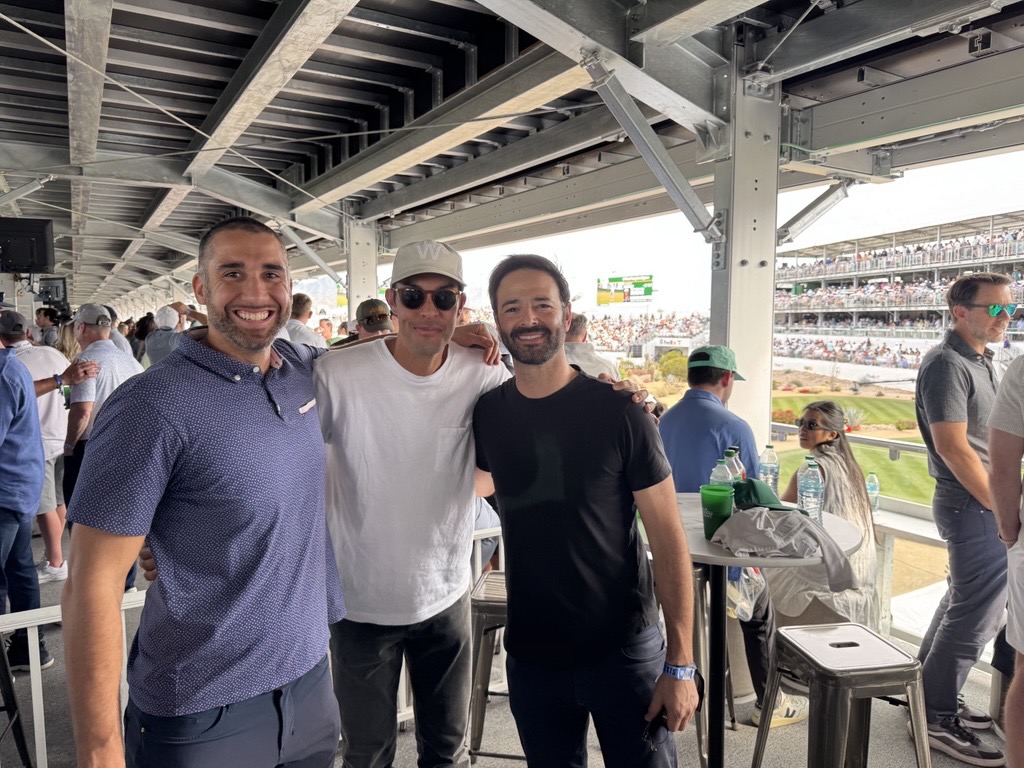
Beyond the speaker panels, some of the most valuable moments happened in smaller conversations in the hospitality box on the famously rowdy 16th hole. There, I was able to learn more about VC fund structures, stages, strategies, and sectors. Like anything else, the venture ecosystem remains relationship-driven and access is often built over time through trust and thoughtful engagement.

Desert Tech Connect reinforced something we have long believed: thoughtful stewardship extends beyond the traditional portfolio. It requires curiosity, continuous learning, and meaningful relationships across industries. Tech is accelerating. Fast. Our responsibility is to try to understand it, evaluate it carefully, and position our clients thoughtfully within it. Our job is to stay connected, stay disciplined, and ensure that when opportunity and suitability align, we are ready.
If conversations about tech shifts, AI, and thoughtful positioning excite you too, let’s connect. Let’s keep learning. Together.
About the Author

Kawika Shoji is an investment advisor and portfolio manager at Regency Capital Management. He advises individuals, families, retirement plans, and institutions to assess, develop, and implement their investment and financial goals.